There's really no question of what jazz I'd be seeing at the start of the new year in 1992 - Betty Carter, appearing at Fat Tuesday's. Carter released her first record in 1958, and while her sound certainly grew and changed over time, it's remarkable how mature her style was - both in interpreting melodies and soloing - from the start of her recording career. I've always enjoyed Carter's melody embellishments much more than Sarah Vaughan's - Carter's mission is to communicate something about the song to her audience, while Vaughan's seems to be to simply communicate her own singing - and her solos more than those of the default "jazz" vocal soloist, Ella Fitzgerald.
By 1992, Carter had become a living legend, a bandleader (like Art Blakey) whose high standards and impeccable taste ushered a generation of tasteful and swinging musicians onto the scene as her sidemen. My guess is that the song referred to in the New Yorker listing is "The Good Life," which Carter recorded in her 1963 record 'Round Midnight and Tony Bennett recorded the same year for I Wanna Be Around... Here's Betty singing an absolutely killer version of "The Good Life" in 1989, the year after she re-recorded it for her record Look What I Got, which won a Grammy:
Tons of great stuff on offer here, from Jaki Byard and his big band at the Blue Note, which opened in 1981, to David Murray with Richard Davis and Joe Chambers at Carlos I, to Roland Hanna, Johnny Coles, Ray Drummond and Terri Lyne Carrington (who was only 21 at the time) at Sweet Basil. Really an embarrassment of riches.
A pretty good selection of jazz on offer in the city almost a quarter of a century ago this week - not very extensive, but varied. Given my choice, I'd have headed over to the Knickerbocker to catch the Roland Hanna and Steve Kuhn engagements.
Stephen Scott's 1992 record Aminah's Dream gets a (misspelled) plug in the Bradley's listing. Scott isn't too visible these days, like many of the hyped young musicians of the early 1990s. He got his start with Betty Carter (he appears on her excellent 1988 record Look What I Got!), but when your debut album is called Something To Consider but features Roy Hargrove, Justin Robinson, Joe Henderson, Craig Handy, Peter Washington, Christian McBride, Lewis Nash and Jeff "Tain" Watts, well, you better have a lot for people to consider. According to Wikipedia, Scott hasn't recorded as a leader since 1999. Still, he was on Joe Henderson's Lush Life...
There's a nice dig at the Blue Note here, too - "jazz, mirrors, and a gift shop." What would they have made of Dizzy's Club Coca Cola?
I have been reading E.B. White's One Man's Meat, the collection of White's dispatches from his Maine farm. I have been reading the book because I need something to read, and I can't read the news anymore; I can't read the humor section of The New Yorker anymore, or look at its covers; I can't look at the A.V. Club anymore; I can't do much of anything anymore without seeing one name over and over again: Trump.
He shows up in the unlikeliest places these days - every thought seems to have its destination in the White House. The A.V. Club has been going downhill for a while now, but it seems to have doubled-down on its culture coverage lately - meaning Trump coverage. He shows up unbidden in reviews and thinkpieces that have nothing to do with him. It seems to me that people feel that if they aren't talking about Trump, he's getting away with something, or that by not professing their hatred for him at every turn, they are endorsing him through silence. I recently watched Patton Oswalt's new comedy special, and it was interesting to me how several times he says that he won't deal with Trump, that the special isn't about Trump, that he's moving on from the Trump material - and yet at least half of the special is about Trump.
I don't agree with our President, and I hope that he is either removed, Nixon-like, or his fairy godmother waves her wand over his sleeping form and he wakes up with good ideas. But to fill every waking hour with disdain for him, hatred of his policies, despair at the direction our country is taking... It seems like he wins that way, because he controls me.
A passage from One Man's Meat struck me as being particularly applicable to this quandary. Of course, White had the rise of fascism on his mind in January 1939, when this entry was written - throughout the book, the situation in Europe provides an ominous undertone to White's small-town life in Maine, and his attempts to wrestle with his idyllic rural isolation and his responsibility to be interested and involved with global affairs make the book a much more powerful one than a simple "personal record of life on a Maine coast salt water farm" (as the book's cover describes it) would be. But I feel that his message here is perfectly suited to the state of letters and media today:
I was sorry to hear the other day that a certain writer, appalled by the cruel events of the world, had pledged himself never to write anything that wasn't constructive and significant and liberty-loving. I have an idea that this, in its own way, is bad news.
All word-mongers, at one time or another, have felt the divine necessity of using their talents, if any, on the side of right - but I didn't realize that they were making any resolutions to that effect, and I don't think they should. When liberty's position is challenged, artists and writers are the ones who first take up the sword. They do so without persuasion, for the battle is particularly their own. In the nature of things, a person engaged in the flimsy business of expressing himself on paper is dependent on the large general privilege of being heard. Any intimation that this privilege may be revoked throws a writer into a panic. His is a double allegiance to freedom - an intellectual one springing from the conviction that pure thought has a right to function unimpeded, and a selfish one springing from his need, as a breadwinner, to be allowed to speak his piece. America is now liberty-conscious. In a single generation it has progressed from being toothbrush-conscious, to being air-minded, to being liberty-conscious. The transition has been disturbing, but it has been effected, and the last part has been accomplished largely by the good work of writers and artists, to whom liberty is a blessed condition which must be preserved on earth at all costs.
But to return to my man who has foresworn everything but what is good and significant. He worries me. I hope he isn't serious, but I'm afraid he is. Having resolved to be nothing but significant, he is in a fair way to lose his effectiveness. A writer must believe in something, obviously, but he shouldn't join a club. Letters flourish not when writers amalgamate, but when they are contemptuous of one another. (Poets are the most contemptuous of all the writing breeds, and in the long run the most exalted and influential.) Even in evil times, a writer should cultivate only what naturally absorbs his fancy, whether it be freedom or cinch bugs, and should write in the way that comes easy.
The movement is spreading. I know of one gifted crackpot who used to be employed gainfully in the fields of humor and satire, who has taken a solemn pledge not to write anything again till things get straightened around in the world. This seems to me distinctly deleterious and a little silly. A literature composed of nothing but liberty-loving thoughts is little better than the propaganda which it seeks to defeat.
In a free country it is the duty of writers to pay no attention to duty. Only under a dictatorship is literature expected to exhibit an harmonious design or an inspirational tone. A despot doesn't fear eloquence writers preaching freedom - he fears a drunken poet who may crack a joke that will take hold. His gravest concern is lest gaiety, or truth in sheep's clothing, somewhere gain a foothold, lest joy in some unguarded moment be unconfined. I honestly don't believe that a humorist should take the veil today; he should wear his bells night and day, and squeeze the uttermost jape, even though he may feel more like writing a strong letter to the Herald Tribune.
Following from the last Night Life, we have another mention of Ahmad Jamal. This time it's a total slam: "Ahmad Jamal, of the flexible fingers and occasionally interesting ideas." Wow.
I'm not familiar with what Jamal was doing music-wise in October 1971, but I do own The Awakening, a record Jamal recorded in February 1970 for Impulse! Records with Jamil Nasser on bass and Frank Gant on drums. I've found Jamal's post-classic trio 1960s output to be less than amazing, but The Awakening is true to its title.
Jamal was always the controlling voice in the trio, so any bassist and drummer needed to find ways to make themselves heard. Israel Crosby did this through incredibly creative basslines that put the bass to the forefront in the trio setting as much as Scott LaFaro's work with Bill Evans (in a much more democratic trio) was doing in the same years; drummer Vernel Fournier made himself heard almost through negative sound, establishing himself as the master of deceptive simplicity at the drums, hitting a groove and holding it like a rhythmic pedal point.
The trio with Nasser and Gant took some time to really hit its stride, which I think they did with The Awakening. Both bassist and drummer had done extensive work with lots of incredible musicians prior to joining Jamal, and they both bring real force to the Jamal sound. Jamal himself is obviously working with new vocabulary, blending his classic approach, with an active right hand and thick left-hand chords, with very Hancockian touches. The overall sound is darker and meatier than what he was playing ten years earlier. The set list is great, too - "Stolen Moments" and "Dolphin Dance" are highlights.
All of this is to say that while I don't know what Jamal was up to a year and a half later, I find it hard to believe he'd totally stagnated in that time. I don't know what the New Yorker's problem is, but my feeling is that their dismissal of Jamal was undeserved.
Given the choice, though, I wouldn't be going to the Village Gate to catch Jamal (or to the Vanguard, recipient of another burn). My money for show of the week is on the doings at Slugs'. The club would close soon after Lee Morgan was murdered there in 1972, but in '71 the place was happening, with Andrew Hill, Herbie Hancock, James Moody and Eddie Jefferson all appearing there. Damn! Hancock came out with Mwandishi in '71, so my guess is the group from that record (including Jabali/Billy Hart) is the sextet referred to in the listing. Andrew Hill wasn't releasing jack in 1971, but some tracks from '70 got issued by Blue Note in 1975, the the same year Hill released five records on East Wind and Freedom labels; he really got things going again in the mid-1970s, so it would have been cool to hear what he was up to during his absence from the studio.
Overall, though, you can really see how there was a resurgence of clubs as we get into the late 1970s and early 1980s. Even in the late 1980s, you saw swing-era and bebop guys playing all over the city, but they're nowhere to be found this week in 1971.
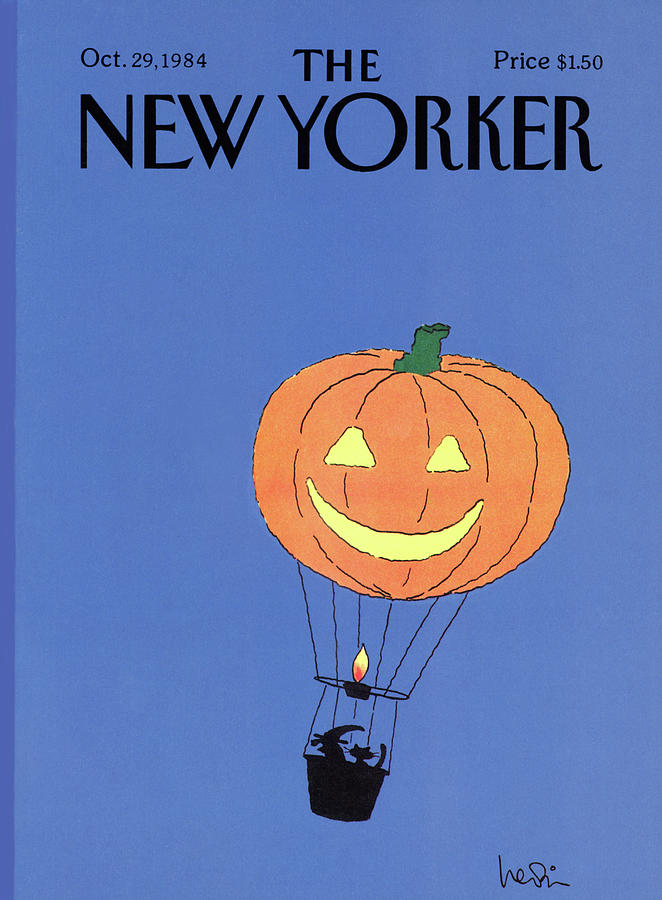
A few interesting things in the New Yorker jazz listings for October 29th, 1984.
First, Billy Eckstine - appearing at the Blue Note - was only fifty-one. He died after a stroke and a heart attack in 1992 and 1993, when he was seventy-eight years old. Miles Davis, who always cherished his time in Eckstine's famous big band in the 1940s, had died in 1991, at only sixty-five. Because so many of the legends of jazz had highly publicized careers in the 1940s, 1950s, and 1960s, it's easy to think of them as old, old men when they died in the 1990s. But they often were at the age when many other great musicians have still been making vibrant music. Billy Hart is seventy-six; next year, Joe Lovano will be sixty-five.
Second, Gil Evans was apparently playing "Charlie Parker tunes on top of a heavy rock beat" at Lush Life. There are a few videos on YouTube of Evans (whose band included Howard Johnson on tuba) playing in Japan with Jaco Pastorius in 1984. As far as seamless transitions into the world of pop and rock go, I'd say this isn't exactly in my top ten:
Nevertheless, it's a good example of what can be learned from these jazz listings: they present the reality of the music scene, not necessarily the highlights.
Third, I think it's interesting that Ahmad Jamal, playing at the Village Vanguard, is even in 1984 described as "controversial," an allusion to accusations of cocktail-pianism leveled at him early in his career (Martin Williams didn't like him). Perhaps this is just the pre-Wynton Marsalis world (although Wynton is also appearing at the Vanguard - but I mean pre-Wynton's educational initiatives), before the narrative of jazz history was codified. Jamal is now naturally slotted as a minor player before Miles's first Great Quintet with Coltrane for his influence on Miles's tune choices and and piano preferences; his actual music is rarely discussed in overviews of the history. Still, it seems weird to still be calling Jamal controversial a quarter-century after "Poinciana."
Actually, TheNew York Times noted Jamal's run at the Vanguard on October 29th as well. The paper wrote that
Ahmad Jamal's primary distinction as a jazz pianist has been in his use of dynamics and coloristic effects. He established this musical identity almost 30 years ago when, leading a trio that included the superb bassist, Israel Crosby, and the drummer Vernel Fournier, he made subtle and sometimes dramatic use of silence and of Mr. Crosby's exquisite touch on bass.
Jamal's last record had come out in 1982 - information about American Classical Music isn't readily available. His next record came out in 1985; Scott Yanow calls it "not essential."